

Heat transfer printing is a flexible group of printing techniques widely used for uniforms. However, the variety of methods (Sublimation, DTF, Decal, etc.) can make it difficult to decide which option offers the best durability, appearance, and compatibility with different fabric types. Understanding each technique helps you make the right decision. This article by Nhat Khoa Uniform will help you distinguish the most common heat transfer printing techniques.
1. Basic Principles and Shared Advantages of Heat Transfer Printing
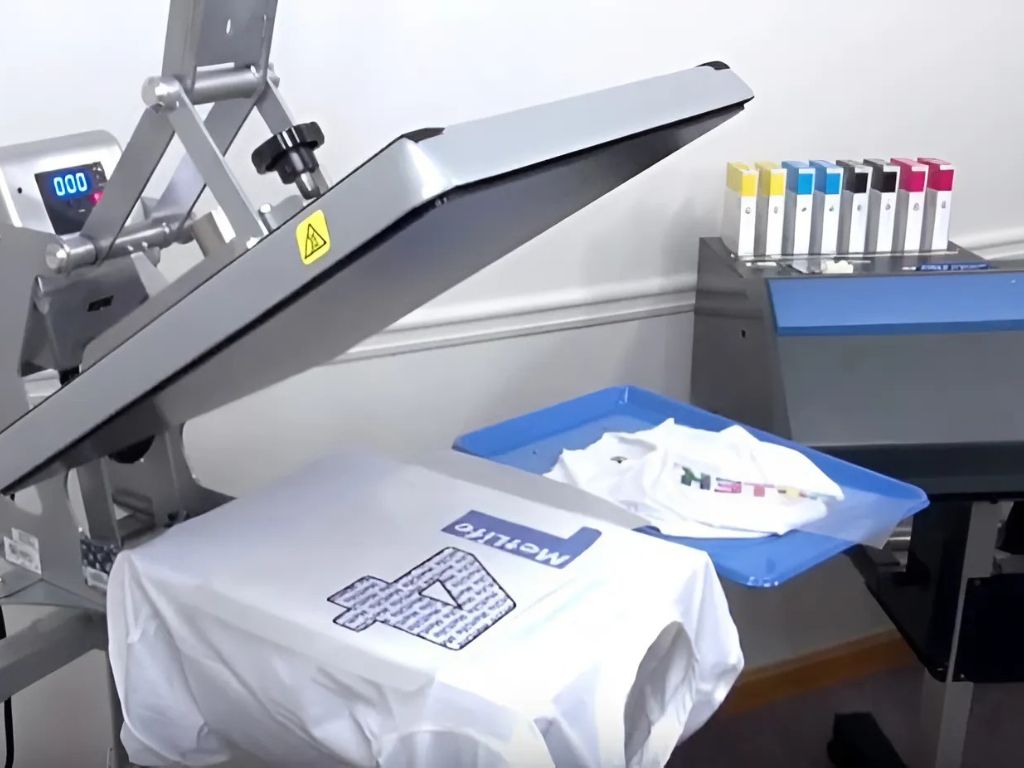
Before exploring each technique in detail, it is important to understand the general principle of heat transfer printing. This group of methods involves indirect printing, meaning ink is not applied directly onto the fabric. Instead, the design is first printed onto an intermediate material (such as specialized paper or film). Under high temperature and pressure from a heat press machine, the image is then transferred and bonded onto the fabric surface of the uniform.
Although each technique uses different materials and mechanisms, the shared principle is the use of heat to transfer images. Some common advantages of heat transfer printing methods include:
- Ability to print complex images: Many techniques support multi-color designs, fine details, and even photographic images.
- Flexibility for small quantities: Certain methods are faster and more cost-effective for small orders compared to screen printing.
- Flexible print placement: Designs can be applied to various positions on a product.
However, the specific advantages and limitations vary significantly depending on the individual heat transfer method such as Sublimation, DTF, or Decal.
2. Comparison of Popular Heat Transfer Printing Techniques
2.1. Sublimation Heat Transfer Printing
This is a unique heat transfer technique with a distinctive mechanism:
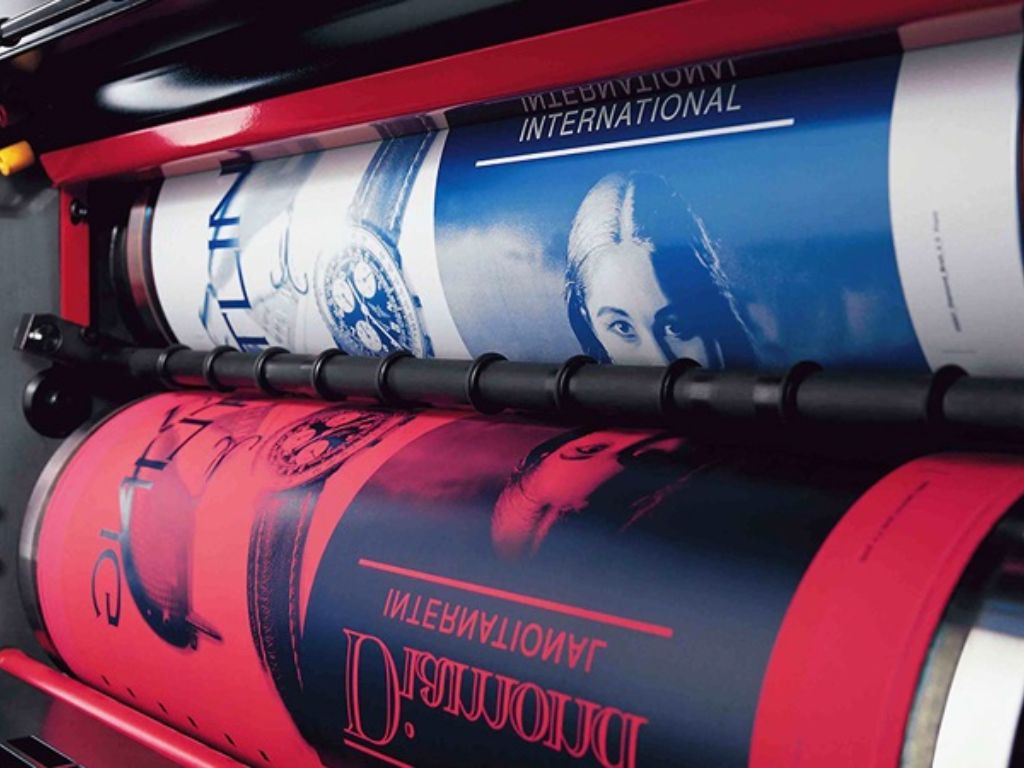
- Process: The design is printed using sublimation ink (a specialized water-based ink) onto dedicated transfer paper. The printed paper is then placed face-down onto the fabric surface and pressed using a heat press machine. Under high temperatures (typically around 180–210°C), sublimation ink transforms directly from a solid into a gas and penetrates deeply, permanently bonding with the polyester fiber structure of the fabric.
- Advantages: Delivers extremely sharp image quality with vibrant and vivid colors. Because the ink fully penetrates the fabric fibers, the print leaves no surface texture and does not affect the softness or breathability of the material. Color durability is permanent, with no peeling, cracking, or fading over repeated washing.
- Disadvantages: This technique works effectively only on fabrics with high polyester content (typically 100% polyester or above 60–70%) and produces accurate, vibrant colors only on light-colored fabrics (white or very light pastel tones).
- Suitable for: Polyester sports uniforms, polyester round-neck T-shirts, fabric flags and banners, as well as promotional items such as ceramic mugs or phone cases that have compatible coated surfaces.
2.2. Heat Transfer Vinyl (HTV / Decal Printing)
This method uses vinyl sheets to create designs.
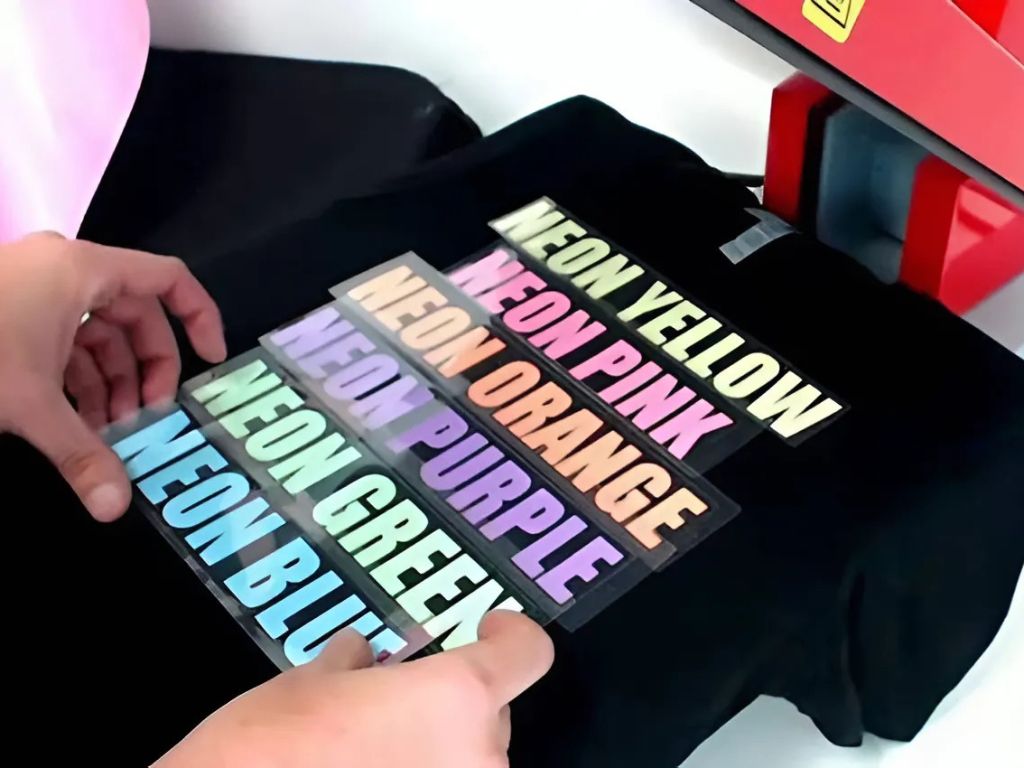
- Process: Graphics, text, or numbers are cut using a specialized vinyl cutting machine from pre-colored vinyl sheets, or printed onto white printable heat transfer vinyl (HTV). The excess vinyl that is not part of the design is removed. The prepared decal is then placed onto the fabric and pressed using a heat press machine, allowing the adhesive layer on the back of the vinyl to melt and bond firmly with the fabric surface.
- Advantages: Applicable to a wide range of fabrics (cotton, polyester, blended fabrics, etc.) and suitable for various fabric colors. A large variety of vinyl types is available with special effects such as glitter, reflective, glow-in-the-dark, velvet, and metallic finishes. This method is ideal for single-color logos, jersey numbers, personalized names, and quick production for small quantities.
- Disadvantages: The print forms a separate vinyl layer on the fabric surface, which may feel slightly raised or stiff, especially with thicker vinyl or large designs, potentially reducing breathability in the printed area. Durability depends greatly on vinyl quality and heat-press technique; low-quality vinyl may crack or peel after extended use and washing.
- Suitable for: Printing jersey numbers, player or employee names, single-color or limited-color logos on polo uniforms, sports jerseys, jackets, caps, and designs requiring special effects that other printing techniques cannot achieve.
2.3. PET Heat Transfer Printing (DTF – Direct to Film)
This is a newer and rapidly developing heat transfer technique.
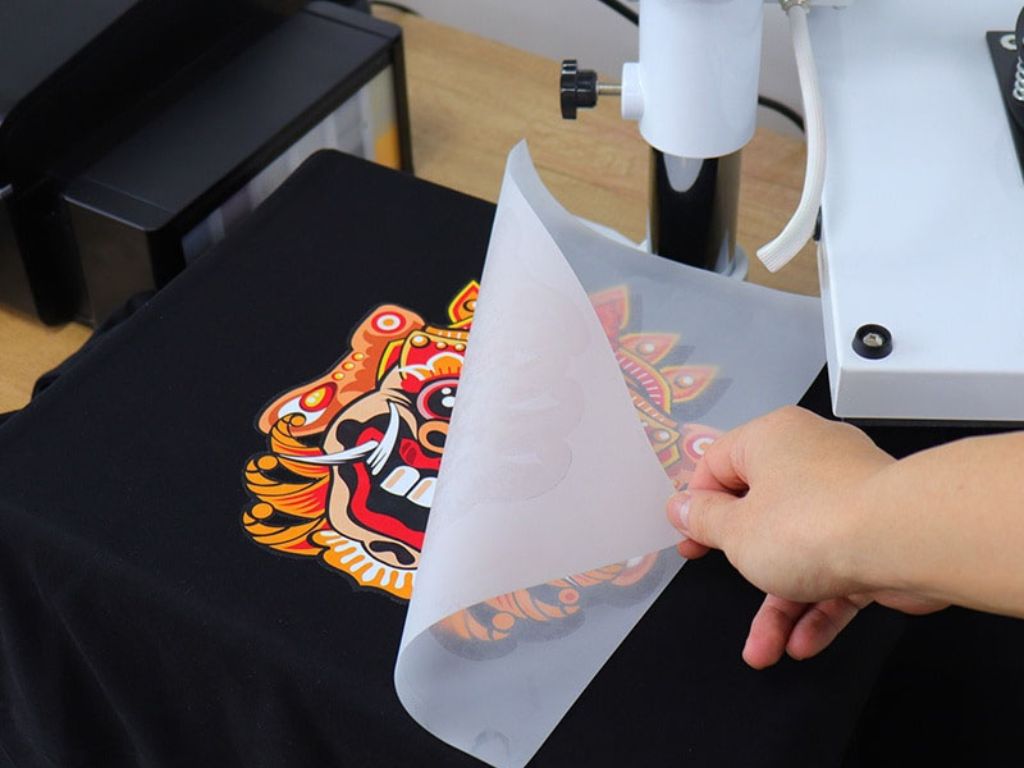
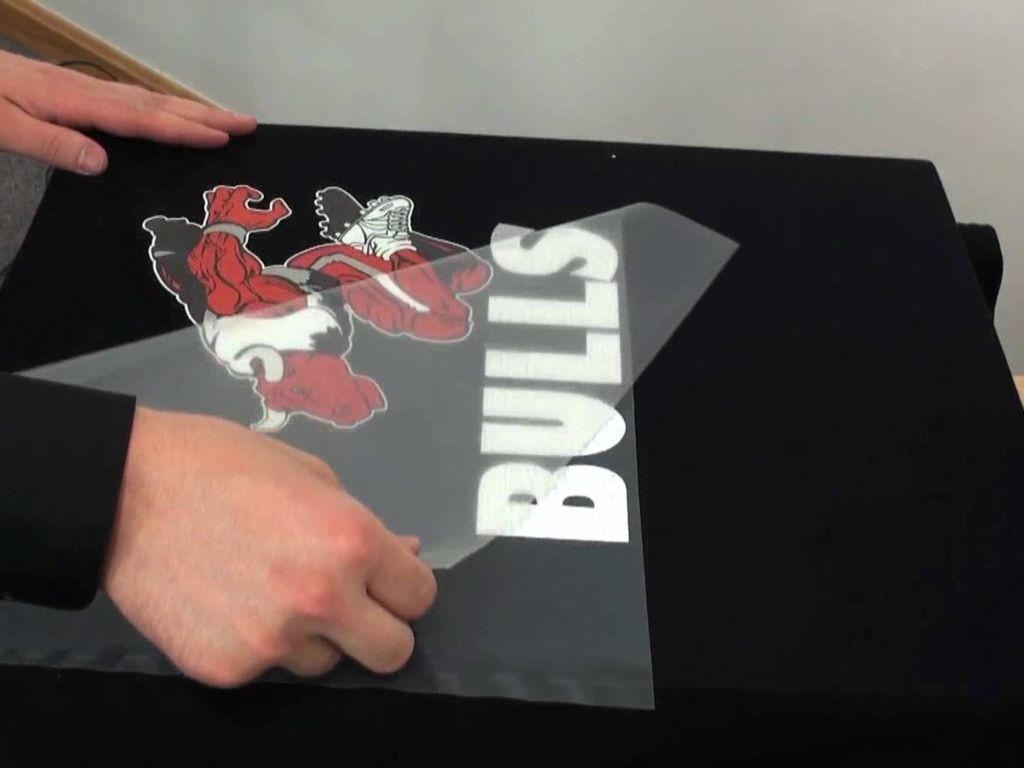
- Process: The image is digitally printed (including a white base ink layer) onto a special PET film → a layer of heat transfer adhesive powder is applied onto the still-wet ink → the film is cured so the adhesive bonds with the ink → the film is placed onto the fabric and heat pressed → after cooling (or hot peeling), the PET film is removed, leaving the printed design bonded to the fabric surface.
- Advantages: Can be applied to most fabric types (cotton, polyester, blends, etc.) and various fabric colors, including black and dark fabrics, thanks to the white base layer. Allows highly detailed, multi-color, and complex images with sharp print quality. The resulting print layer is relatively thin, soft, and flexible, stretching naturally with the fabric. Wash durability is considered quite high when quality materials and proper pressing techniques are used.
- Disadvantages: The process involves more steps compared to sublimation printing. Final quality depends heavily on the quality of inks, adhesive powder, and PET film used. Costs may be higher than screen printing for large-volume orders.
- Suitable for: Printing logos and complex multi-color images on various fabric materials and colors, especially effective on dark fabrics or for small-to-medium production quantities. Highly versatile for many types of uniforms.
3. Factors to Consider When Choosing a Heat Transfer Technique
3.1. Fabric Type
Fabric material is the most important factor:
- Polyester fabrics: Sublimation is optimal for durability and comfort. DTF and HTV are also usable.
- Cotton or blended fabrics: PET (DTF) or HTV is recommended. Sublimation is not suitable.
3.2. Fabric Color
Fabric color affects printing performance:
- Light fabrics: Sublimation, DTF, and HTV all perform well.
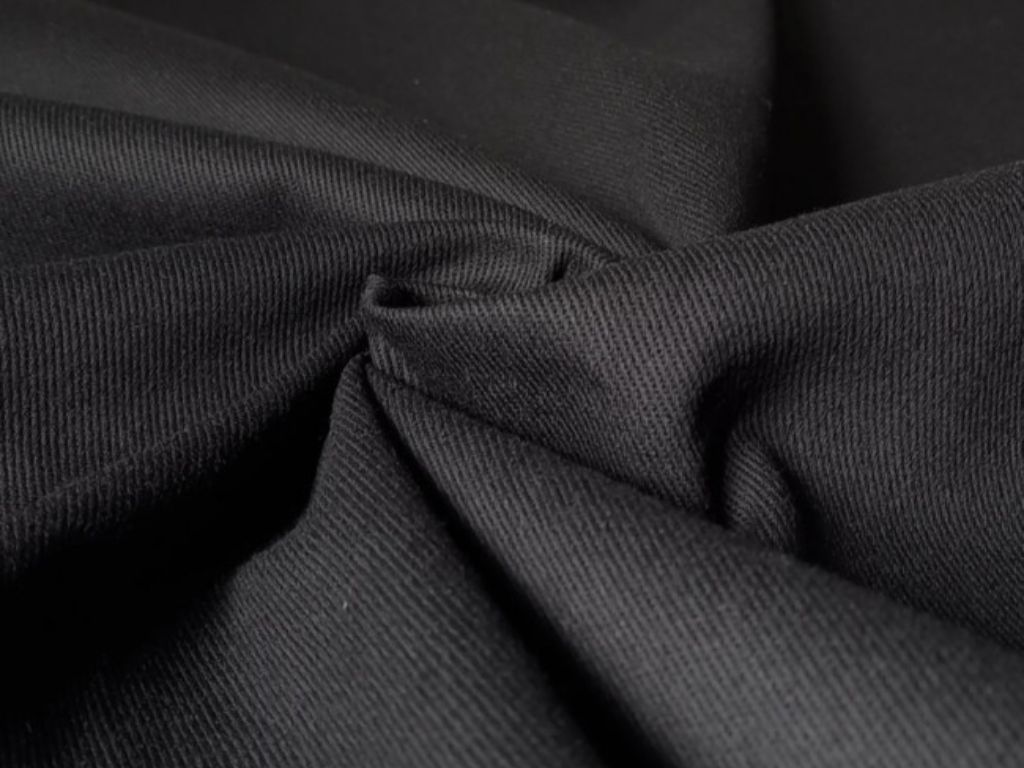
- Dark fabrics: Choose PET (DTF) or HTV. Sublimation is ineffective.
3.3. Design Characteristics
Design complexity determines suitable techniques:
- Complex, multi-color images or gradients: Sublimation or PET (DTF).
- Simple logos, text, numbers: HTV is efficient and fast; DTF also works well.
3.4. Order Quantity
Order size impacts cost efficiency:
- Small quantities: HTV or DTF are flexible and economical due to minimal setup costs.
- Sublimation is also flexible and does not require high minimum quantities.
3.5. Durability and Wearing Comfort
Depending on desired results:
- Maximum durability and soft feel: Choose Sublimation (if fabric allows).
- Balanced durability and flexibility: Choose PET (DTF).
- Special effects or quick personalization: Choose HTV (quality depends on vinyl).
3.6. Budget Considerations
Costs vary by technique:
- Sublimation and simple HTV can be more economical in certain applications.
- PET (DTF) typically falls within a mid-range cost, balancing flexibility and quality.
4. Nhat Khoa Uniform – Providing Diverse Heat Transfer Printing Solutions
Choosing the right heat transfer printing technique for each fabric and design is essential for achieving high-quality uniforms. As a comprehensive uniform solution provider, Nhat Khoa Uniform helps customers make the most effective choice.
We offer FREE CONSULTATION. Not sure whether to choose Sublimation, HTV, or PET (DTF) for your uniform design? Based on your desired fabric, design complexity, quantity, and specific requirements, Nhất Khoa experts will analyze and recommend the most suitable technique—balancing quality, aesthetics, and cost.
Nhat Khoa Uniform delivers comprehensive printing solutions. We strictly control printing quality, use high-quality materials, and apply precise heat-press processes to optimize durability and visual appeal. Combined with competitive pricing, design support, and on-time delivery commitments, we ensure customer satisfaction.
Contact Information – Nhat Khoa Uniform
- Factory: 1053/3 Le Van Luong Street, Nha Be Commune, Ho Chi Minh City, Vietnam
- Hotline: 082 345 1195
- Email: service@nkclothing.vn
- Website: nkclothing.vn
- Fanpage: Nhat Khoa Uniform
Heat transfer printing is not a single technique but a collection of diverse methods such as Sublimation, HTV, and PET (DTF), each with its own strengths and suitable applications. For expert consultation and the optimal heat transfer printing solution, contact Nhat Khoa Uniform via hotline 082 345 1195 or visit nkclothing.vn.