

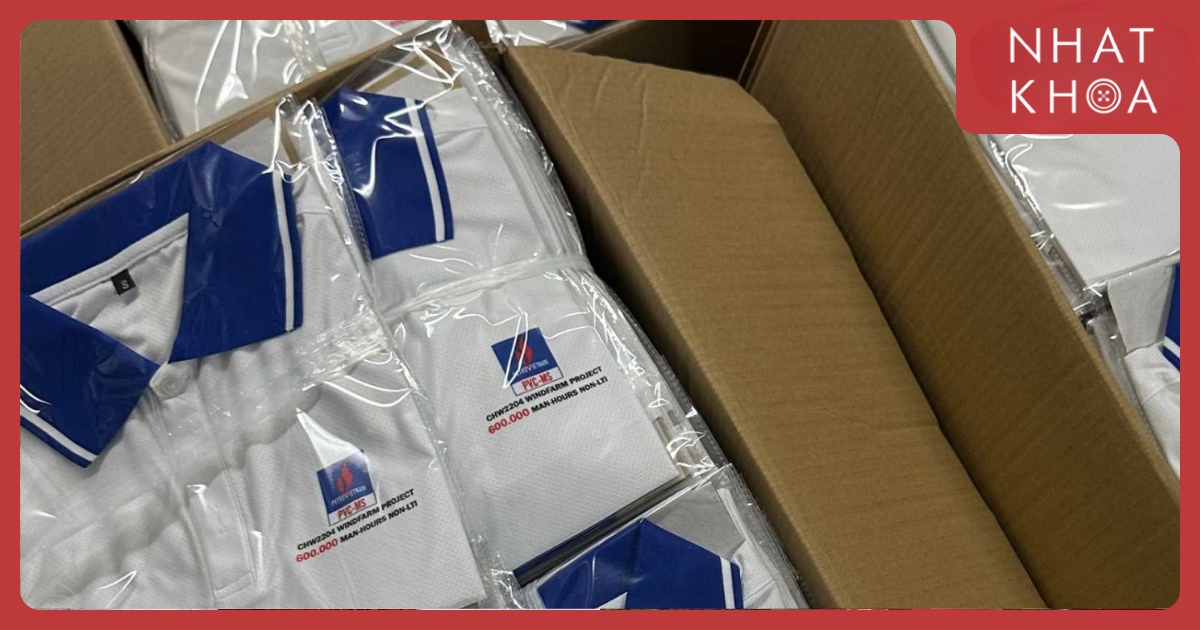

In the garment industry—especially uniform manufacturing—product quality is a critical success factor. To ensure consistent quality, one indispensable stage is QC. So what is QC? Which uniform QC standards must be followed? This article by Nhat Khoa Uniform provides a comprehensive and detailed overview of QC in the uniform manufacturing industry.
1. What Is QC? – Definition and Role in the Garment Industry
What is QC? QC stands for Quality Control. It refers to a system of activities and procedures designed to inspect, monitor, and ensure polo uniforms quality throughout the entire production process—from raw material input to the final finished product.
In the garment industry, QC plays an extremely important role:
- Ensuring product quality: QC helps detect and eliminate defective or substandard products, ensuring that items delivered to customers meet required quality standards.
- Reducing risk: QC prevents errors during production, minimizing quality-related risks as well as costs associated with repairs or rework.
- Enhancing brand reputation: High-quality products build customer trust and enhance a company’s brand value and credibility.
- Improving productivity: When production processes are closely monitored and issues are identified early, overall productivity improves.

2. Uniform QC Standards That Must Be Followed
2.1. Fabric Quality Standards
Fabric is a key factor that directly affects durability, comfort, and aesthetics. Fabric quality standards include:
- Color fastness: Fabric must not fade or bleed after repeated washing.
- Shrinkage: Fabric shrinkage must remain within acceptable limits after washing.
- Mechanical strength: Fabric must have good tensile strength, tear resistance, and abrasion resistance, without tearing or pilling.
- Fabric composition: Must match the declared composition (e.g., 100% cotton, 65% cotton / 35% polyester, etc.).
- Safety: Fabric must not contain harmful substances or cause skin irritation.
2.2. Sewing Technique Standards
Sewing techniques play a decisive role in creating high-quality uniforms with good fit and durability. Standards include:
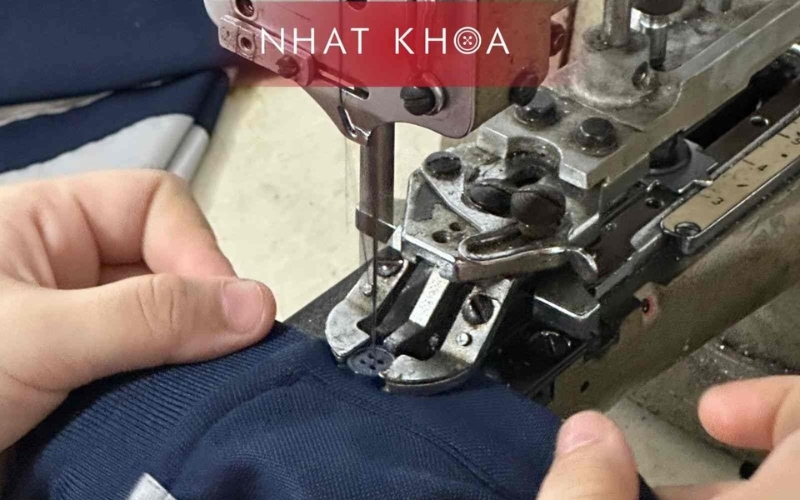
- Stitching: Stitches must be straight, even, and secure, without skipped stitches, loose threads, broken threads, or puckering.
- Stitch density: Stitch density must be appropriate for each fabric type and garment design, ensuring both durability and visual appeal.
- Fit and form: Uniforms must match the approved design and size specifications, fitting the wearer properly without being too tight, loose, or misaligned.
- Sewn components: Details such as buttons, zippers, pockets, and plackets must be securely attached, correctly positioned, and functional.
2.3. Printing/embroidery Standards (If applicable)
For uniforms with printed or embroidered logos and graphics, the following standards apply:
- Print/embroidery quality: Images must be sharp, clear, accurate in color, size, and shape according to the approved design.
- Color durability: Prints or embroidery must not fade, peel, crack, or deteriorate after repeated washing and use.
- Placement: Logos and graphics must be positioned correctly according to the design layout, ensuring visual balance and aesthetics.
2.4. Appearance Standards
Beyond materials, sewing, and printing/embroidery, uniforms must meet appearance standards:
- Cleanliness: Uniforms must be clean and free from stains, dust, oil, or any foreign substances on the fabric surface.
- No visible defects: Products must not have visible defects such as tears, holes, scratches, stitching errors, or color bleeding.
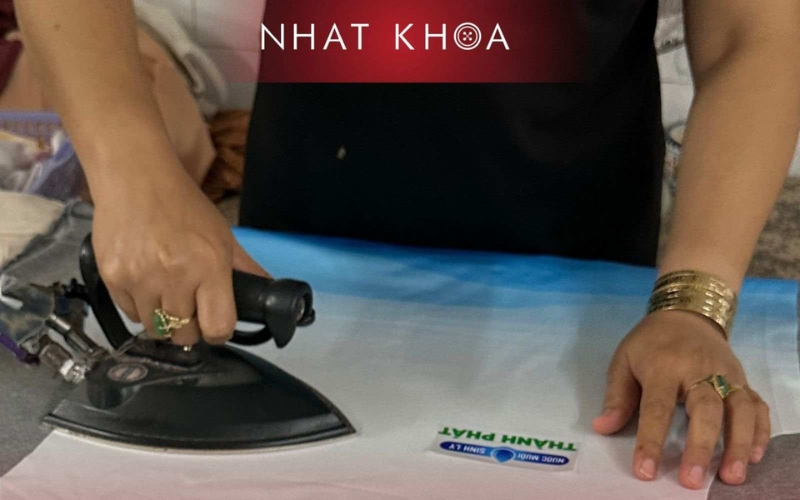
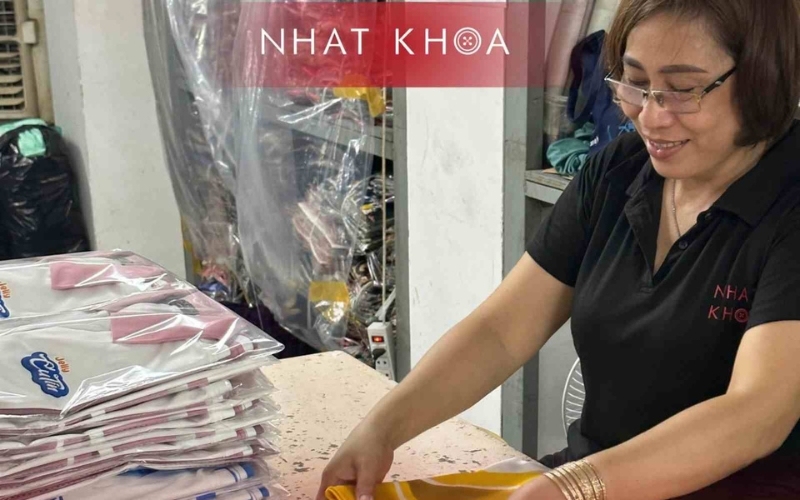
- Packaging: Uniforms must be neatly folded, properly pressed (if required), and carefully packaged to prevent wrinkling or damage during transportation.
3. Standard Uniform QC Process at Nhat Khoa Uniform
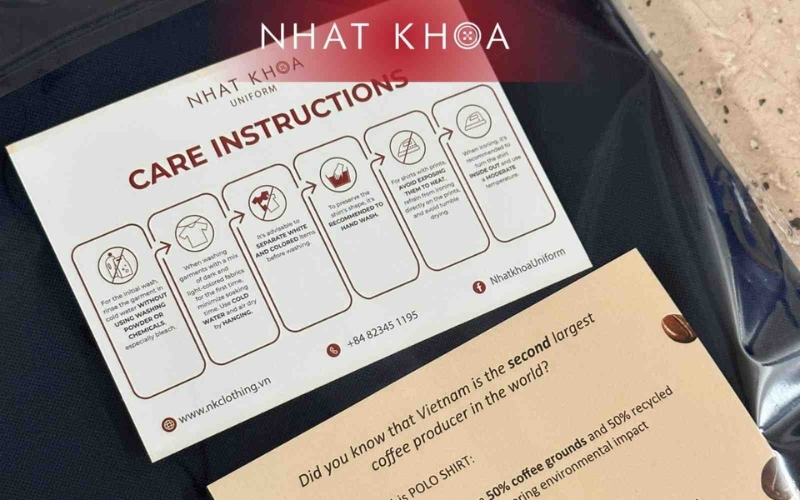
A standard QC process at Nhat Khoa Uniform typically includes the following steps:
- Input Quality Control (IQC): Inspection of fabric, sewing threads, buttons, zippers, and accessories before production.
- Process Quality Control (PQC): Inspection of semi-finished products at each production stage (cutting, sewing, printing/embroidery, etc.).
- Output Quality Control (OQC): Comprehensive inspection of finished products before factory release.
- Final Quality Control (FQC): Final inspection before delivery to the customer.
4. How to Ensure Uniform Quality
To ensure uniform quality, businesses should:
- Choose a reputable supplier: Select an experienced manufacturer with a proven QC process.
- Define clear quality standards: Agree in advance on specific quality requirements with the supplier.
- Thoroughly inspect samples: Request and carefully review samples before mass production.
- Monitor the production process: Supervise and inspect production to ensure standards are maintained.
- Inspect upon delivery: Carefully inspect products upon receipt to identify and resolve any issues promptly.
Contact Information – Nhat Khoa Uniform
- Factory: 1053/3 Le Van Luong Street, Nha Be Commune, Ho Chi Minh City, Vietnam
- Hotline: 082 345 1195
- Email: service@nkclothing.vn
- Website: nkclothing.vn
- Fanpage: Nhat Khoa Uniform
This article aims to help you better understand what QC is and the essential uniform QC standards. If you are looking for a reliable uniform manufacturing partner with a rigorous QC process, please contact Nhat Khoa Uniform via hotline 08 2345 1195 or visit nkclothing.vn for professional consultation and a competitive quotation.