

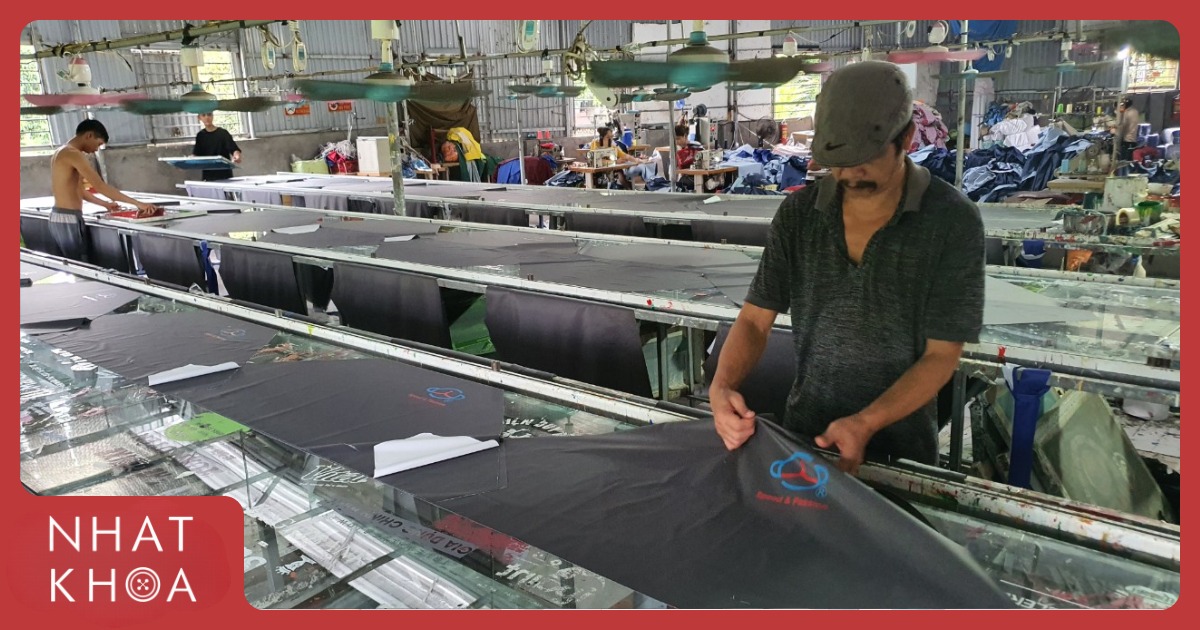

To produce raincoats that are not only durable and visually refined but also provide optimal protection, the raincoat manufacturing process requires meticulous attention and precision across multiple complex stages. Nhat Khoa Uniform invites you to explore in detail the steps involved in creating a high-quality raincoat product at the factory.
Key highlights
- The professional raincoat manufacturing process involves many complex stages, from design consultation and material selection to final quality control.
- Waterproof fabric and seam sealing technology are the two most important factors determining the optimal water resistance of the finished product.
- The logo printing or embroidery process transforms raincoats into effective brand promotion tools for businesses and organizations.
- Quality control (QC) is implemented throughout every stage, ensuring product uniformity and minimizing errors.
- Modern machinery such as automatic cutting machines and high-frequency seam sealing machines play a key role in improving productivity and quality.
1. Overview of a professional raincoat manufacturing process
In the garment industry—especially for technically demanding products such as raincoats – establishing a structured and professional manufacturing process plays a critical role. A standardized process ensures that every raincoat leaving the factory meets consistent quality standards, while also optimizing time and costs to effectively fulfill large-volume orders. This, in turn, helps businesses reinforce their credibility and competitiveness in the market.
The core objective of this process is to deliver flawless finished products that fully comply with approved designs and customer requirements. In addition, optimizing resources, minimizing waste, and ensuring on-time delivery are equally important goals that any production facility strives to achieve. Factors such as modern raincoat production technology, specialized machinery, workforce expertise, and the quality of raincoat fabrics and accessories all directly influence the success of the entire process.
When businesses have a clear understanding of the raincoat manufacturing process, collaboration with suppliers becomes significantly smoother. This allows for more proactive quality monitoring, order progress tracking, and timely adjustment requests when necessary—ensuring the final product fully meets expectations.
2. Detailed steps in the raincoat manufacturing process at the factory
2.1. Step 1: Requirement intake, consultation and design
The starting point of every raincoat manufacturing process is listening to and understanding customer needs. This foundational step defines the final product to best align with intended use and expectations. This stage includes the following key activities:
- Information intake: The factory collects essential details such as order quantity, intended use (promotional gifts, employee equipment), budget, and specific requirements regarding style, materials, and logo or message printing ideas.
- Consultation: Based on the information provided, consultants recommend suitable raincoat fabrics (such as polyester pongee or PVC), popular styles (batwing raincoats, two-piece sets, fashion raincoats), and color options aligned with brand identity.
- Design: Once the concept is finalized, the design team creates detailed technical drawings, clearly indicating logo placement, printing areas, and size specifications for each size to ensure visual clarity for the customer.
- Sample approval: Customers review and approve the design. For large or complex orders, a physical sample is often produced for evaluation of fabric quality, stitching, and overall fit before mass production.

2.2. Step 2: Selection and Quality Inspection of Materials and Accessories
After the design is approved, the next step in the raincoat manufacturing process is preparing all the necessary materials. The quality of the product depends heavily on this stage, requiring care and meticulous attention to detail. Key activities include:
- Fabric selection: The factory sources fabrics that match the approved specifications in type and color. Incoming fabrics are carefully inspected for thickness, color fastness, and—most importantly—waterproof performance.
- Accessories: Other necessary components are prepared, including specialized waterproof sewing threads, snap buttons, zippers, seam-sealing tape, and product labels.
- Input Quality Control (IQC): All materials undergo strict IQC inspection before entering the cutting and sewing lines, minimizing potential defects during production.
2.3. Step 3: Fabric Spreading and Cutting According to Patterns
With materials ready, the next step is shaping the raincoat components. This is one of the most precision-intensive stages to ensure proper garment form upon completion. The cutting process includes:
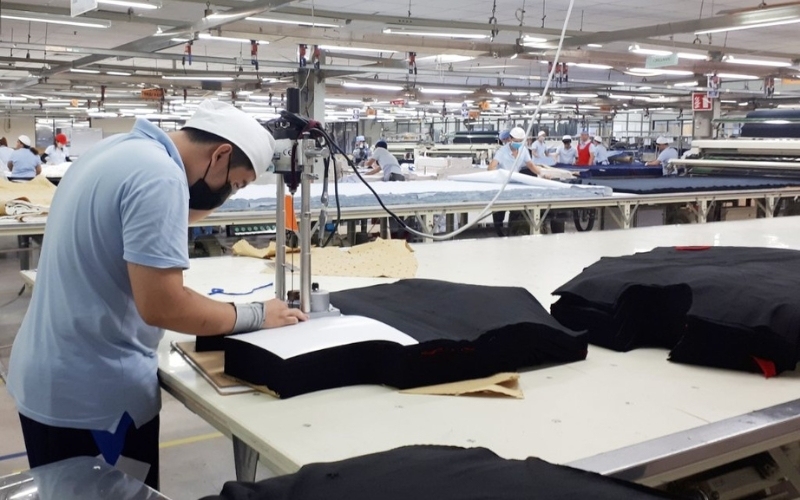
- Fabric spreading: Fabric is layered on large cutting tables. The number of layers depends on fabric thickness and cutting machine capacity to maximize productivity.
- Pattern layout: Detailed pattern layouts for components such as front panels, back panels, sleeves, hoods, and pockets are prepared using specialized software, then printed or projected onto the fabric surface.
- Cutting: Workers use appropriate cutting machines—manual cutters for small batches, vertical cutters or automated cutting systems for larger volumes—to cut along the pattern lines with high precision.
2.4. Step 4: Printing or Embroidery of Logos and Graphics (If Applicable)
To reinforce brand identity or add decorative elements, cut fabric pieces proceed to printing or embroidery—transforming raincoats into effective branding tools. This stage includes:
- File preparation: Logo and artwork files are checked and standardized to suit the selected printing or embroidery method.
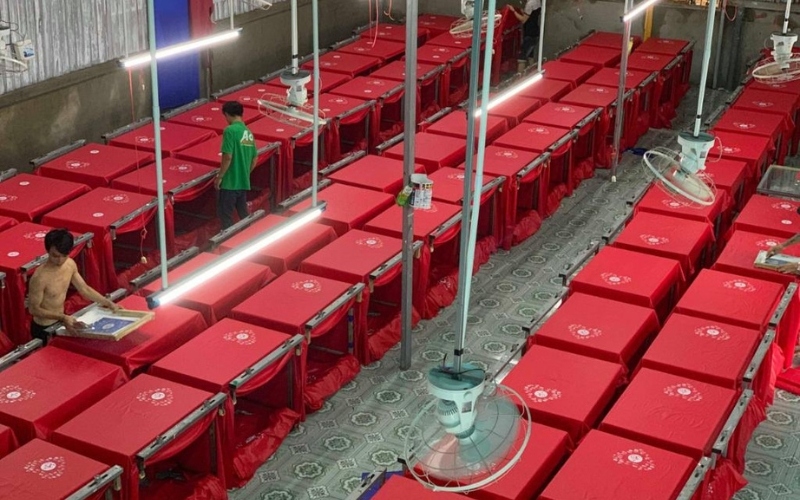
- Printing: Depending on fabric type, design complexity, quantity, and budget, suitable techniques are applied—such as screen printing, decal printing, or heat transfer printing—typically on semi-finished fabric panels.
- Embroidery: For premium requirements demanding durability and refined aesthetics, computerized embroidery is used.
- Print/embroidery quality inspection: Finished prints or embroidery are inspected for sharpness, color accuracy, and adhesion or stitch durability.
2.5. Step 5: Sewing Assembly and Seam Sealing
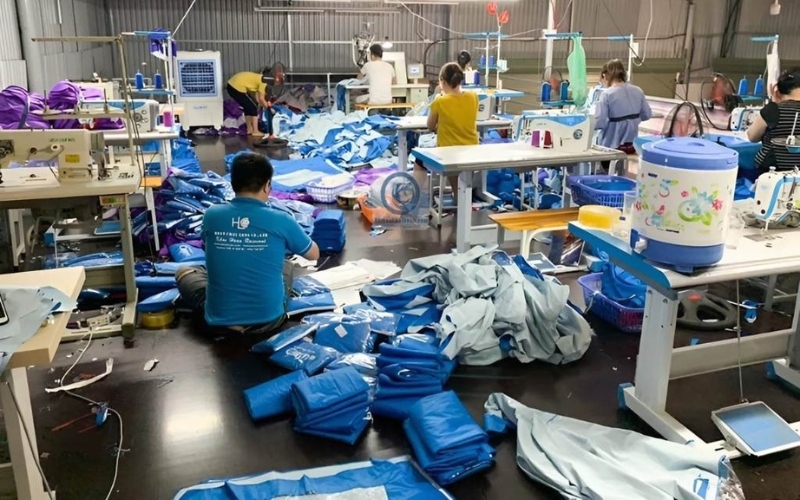
This is the core stage of the raincoat manufacturing process, where individual fabric pieces are assembled into a complete product. Worker skill and machinery quality are decisive factors. This step includes two main parts:
- Sewing assembly: Fabric panels are sewn together using industrial sewing machines following technical guidelines to assemble the body, sleeves, hood, and pockets accurately.
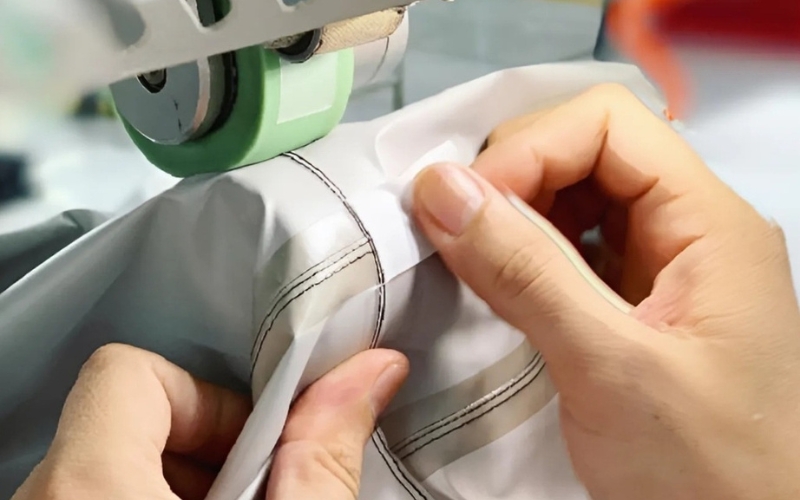
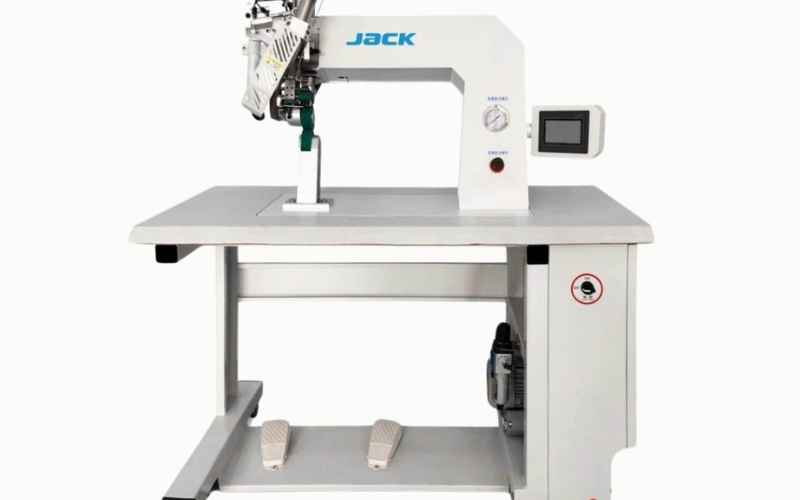
- Seam sealing: To ensure waterproof performance, specialized seam-sealing machines apply waterproof seam tape to the inside of all stitched seams, sealing needle holes created during sewing.
2.6. Step 6: Finished Product Quality Inspection (KCS/QC)
To ensure every raincoat meets high-quality standards, final quality control—commonly referred to as KCS or QC (Quality Control)—is indispensable. Inspection activities include:
- Overall inspection: Checking garment shape, stitch consistency, print/embroidery quality, and functionality of accessories such as snaps and zippers.
- Waterproof testing: Selected samples undergo waterproof testing, such as water spraying or other factory-standard testing methods.
- Defect handling: Products failing quality standards are classified; minor defects are repaired, while irreparable items are removed.
2.7. Step 7: Finishing, Packaging, and Delivery
These are the final steps before delivery, significantly influencing product value and customer experience. Finishing activities include:
- Label attachment: Product labels, brand tags, and care instructions (if applicable) are attached at designated positions.
- Folding and packaging: Approved raincoats are neatly folded and packaged individually according to customer requirements.
- Carton packing: Individually packed items are placed into cartons in specified quantities for safe transportation.
- Final counting and delivery: Quantities are verified against the order before shipment, followed by delivery according to agreed timelines and locations.
3. The role of technology and machinery in modern raincoat manufacturing
In today’s raincoat manufacturing industry, modern technology and machinery play a crucial role—not only in boosting productivity but also in significantly improving product quality. These advancements enable factories to meet large orders with increasingly stringent requirements.
Key technologies include:
- Automated fabric cutting machines: Maximize cutting accuracy and significantly reduce processing time, especially effective for large-scale production.
- Programmable sewing machines: Execute complex stitching with consistent quality and high aesthetics, minimizing human error.
- High-frequency seam sealing machines: Ensure absolute waterproofing by bonding seam tape through high-frequency heat, even in high-stress areas.
- Advanced printing technologies: Digital printing, UV printing on PVC, and specialized inks deliver sharp images, accurate colors, and enhanced durability under weather exposure.
- Production management software: Enables order tracking, inventory management, quality control at each stage, and overall workflow optimization.
4. Nhat Khoa Uniform: Optimizing the raincoat manufacturing process for quality and customer satisfaction
At Nhat Khoa Uniform, we understand that a strictly controlled and continuously optimized raincoat manufacturing process is key to delivering high-quality products that meet customer expectations. We constantly refine each stage—from requirement intake to delivery—to address common concerns such as inconsistent quality or delayed timelines.
To ensure every raincoat bearing the Nhat Khoa Uniform name is a finished product of excellence, we focus on:
- FREE CONSULTATION: From the outset, our specialists carefully assess customer needs and provide detailed guidance on fabrics, styles, and printing options.
- Direct factory pricing: By optimizing every stage of the manufacturing process, we maintain competitive pricing without compromising quality.
- Design aligned with brand identity: All designs are carefully reviewed and standardized with customers before mass production.
- On-time delivery: A strict progress-tracking system ensures timely delivery as committed.
- Meticulous craftsmanship: Rigorous QC checks are applied at every stage—from material inspection to final product evaluation.
Contact Information – Nhat Khoa Uniform
- Factory: 1053/3 Le Van Luong Street, Nha Be Commune, Ho Chi Minh City, Vietnam
- Hotline: 082 345 1195
- Email: service@nkclothing.vn
- Website: nkclothing.vn
- Fanpage: Nhat Khoa Uniform

A professional raincoat manufacturing process, carefully controlled at every stage, forms a solid foundation for delivering products that meet the highest standards. Contact Nhat Khoa Uniform today via hotline 082 345 1195 or visit nkclothing.vn to receive detailed consultation and experience a dedicated, professional raincoat manufacturing process.